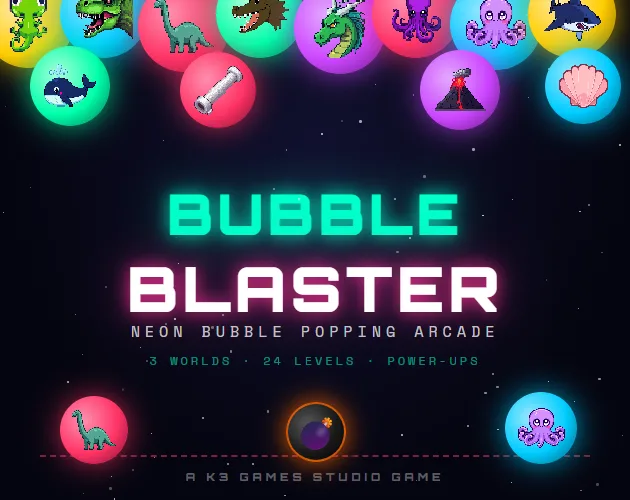
Bubble Blaster is not a new idea. It is an old project I wrote as a study of Canvas2D architecture: hexagonal grid, flood-fill matching, object pooling, a state machine. It worked, it was neat code, and it was a portfolio piece, not a game I would ask anyone to play. So I asked the studio's question: what is missing for this to respect the player?
The agent that tells me the truth
The game-pm skill cloned the repository, installed it, and played it through Playwright to check the baseline. I kept the stack, plain JavaScript with Canvas2D and Vite, because the game was already complete and well structured. Rewriting it in another engine would have been work with no gain. The AI tools went into the assets and the polish.
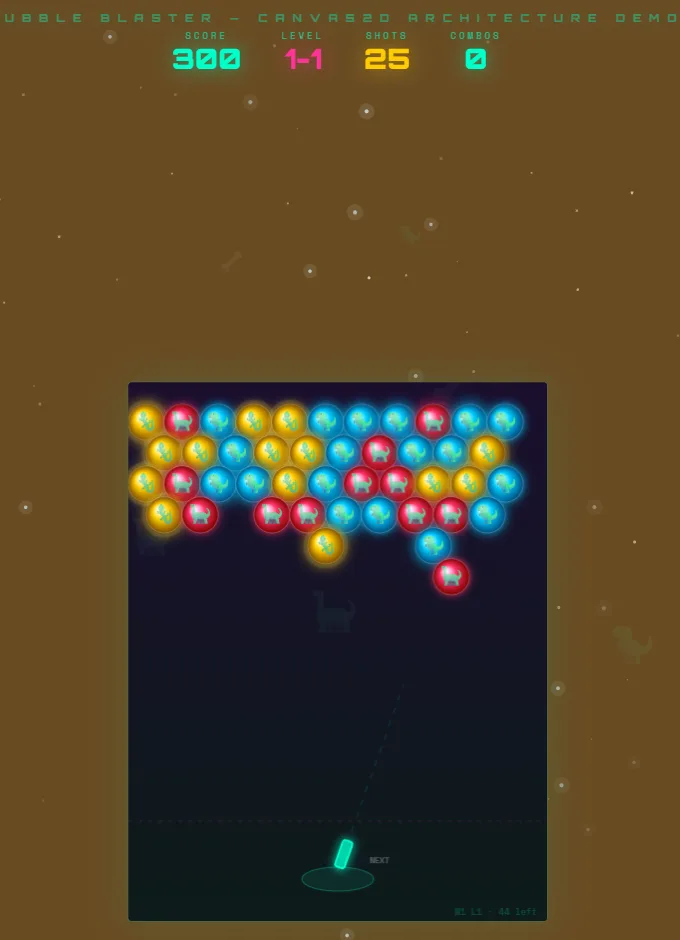
Then game-qa played about eighty real shots and rejected the build with four major bugs. The loaded bubble never appeared in the cannon. The projectile speed depended on the frame rate, so on a high-refresh monitor the shot was much faster. A bubble could overwrite an occupied cell and vanish. And the end-of-level bonus described in the design document simply did not exist. The game-dev skill fixed each one with a test, and a code review confirmed it afterwards.
Making it look and sound like a game
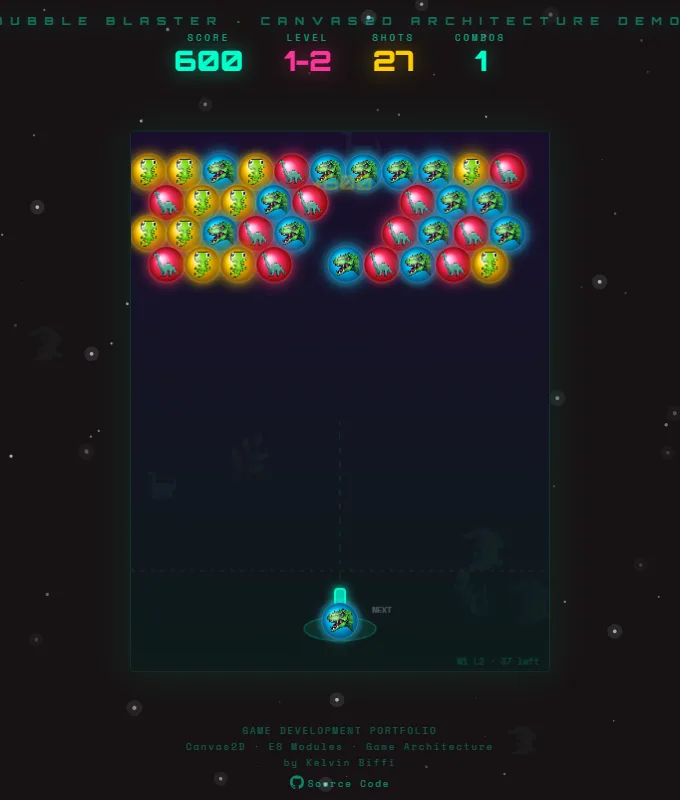
game-artist generated eighteen pixel art icons through Replicate with the Retro Diffusion model, six creatures for each of the three worlds: Dinosaur Valley, Kaiju Island and Deep Ocean. The palette of each icon was picked to contrast with its bubble color so it never disappears. Sixteen were approved on the first try; the shark and the shell were regenerated because they got lost against the bubble.
game-audio made one Suno track per world and six ElevenLabs sound effects, with a mapping that says which sound plays on which action, at what volume and with what ducking. The pop sound climbs in pitch for each bubble in a cluster, so a big match becomes a little staircase.
A simulator that played thousands of games
The part I like most came from game-balance. It wrote a headless simulator that used the game's own grid code and a bot that evaluates dozens of angles per shot. The original difficulty table had a win rate between zero and six percent at every level, which is mathematically unfair: the shot could come in a color that no longer existed on the board.
The fix was a rule borrowed from the genre, smart colors: the shot is drawn only among colors still alive on the grid. With it, a level that the bot won six percent of the time jumped to about sixty-six. The final table runs from ninety-seven percent in the first level down to twenty-five in the last, so there is no wall and no valley. The six-color levels were removed because they were unplayable even in the simulator.
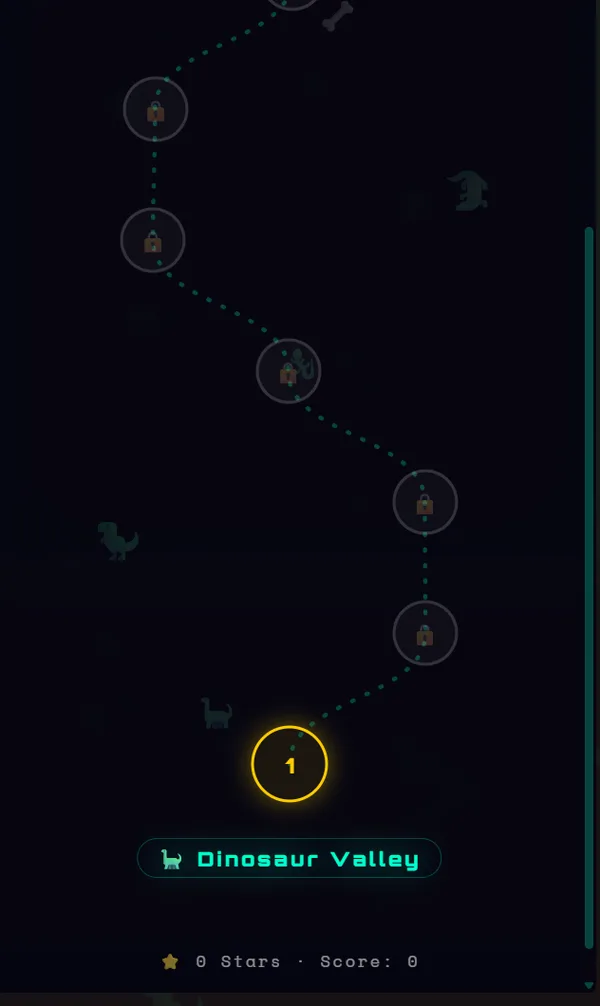
From there came the polish: game-vfx added screen shake in big clusters, a trail on the projectile, squash when a bubble settles and slow motion when a large cluster drops. game-ux played as a new player and gave the first-session onboarding a low score, so we added a hint and made level one almost impossible to lose. Later the game gained bomb and rainbow bubbles, the landing ghost and a journey map.
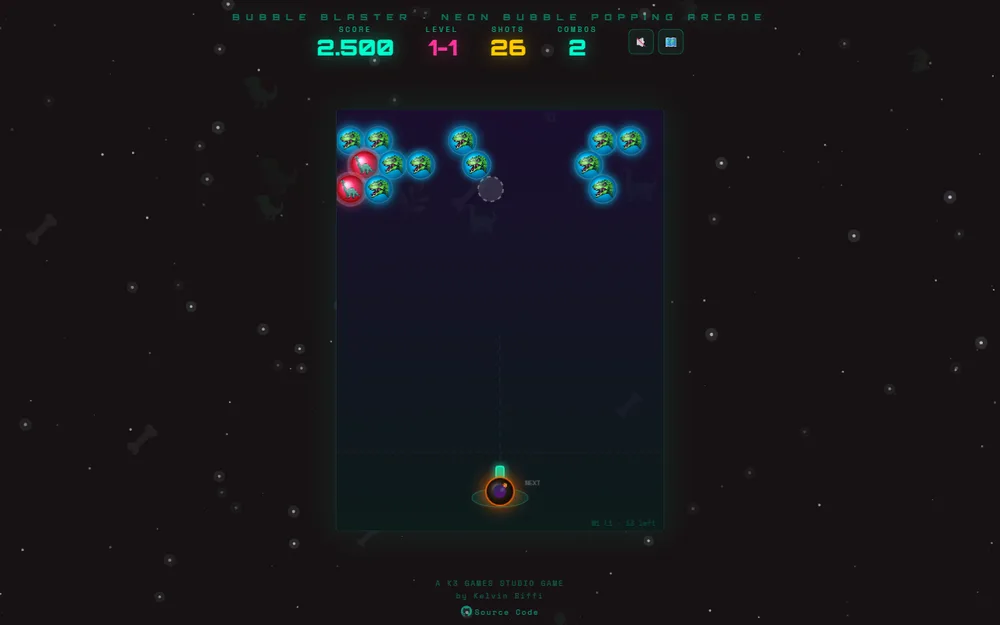
Bubble Blaster is free to play on itch, with twenty-four levels across three neon worlds.
Game developed by Kelvin Biffi: kelvinbiffi.com
Soundtrack made with Suno through SunoBoard.
Sound effects made with ElevenLabs.