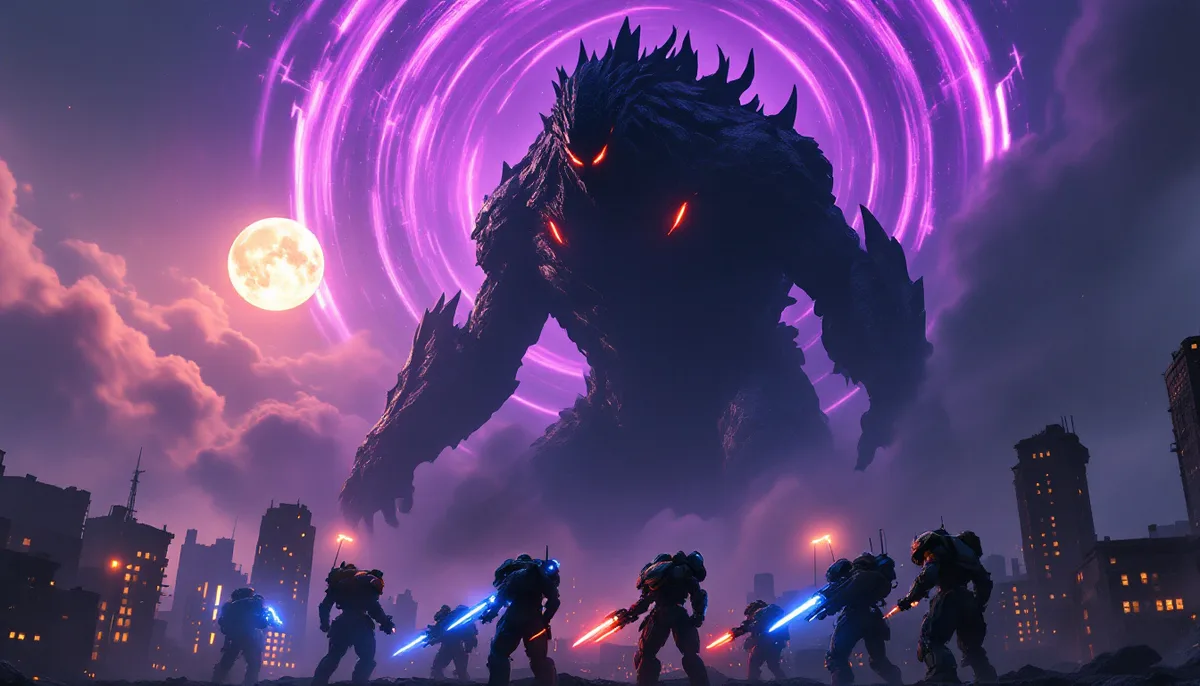
After two pixel art games, the question was unavoidable: can the studio handle scale? Kaiju Siege was born to answer it. The enemy is not a wave of little things, it is a monster the size of a building walking toward you.
The idea, and why Babylon.js
A tower defense where the economy is the heart: a fallen kaiju becomes scrap, and scrap becomes towers. Every round is an engineering decision, reinforce what works or bet on new technology before the next colossus shows up.
I chose Babylon.js for a very practical reason: it is 100 percent code. No editor to click through, which means the AI could build and test everything on its own. That is the difference between a game a human directs and a game a human has to assemble.
Working in rounds
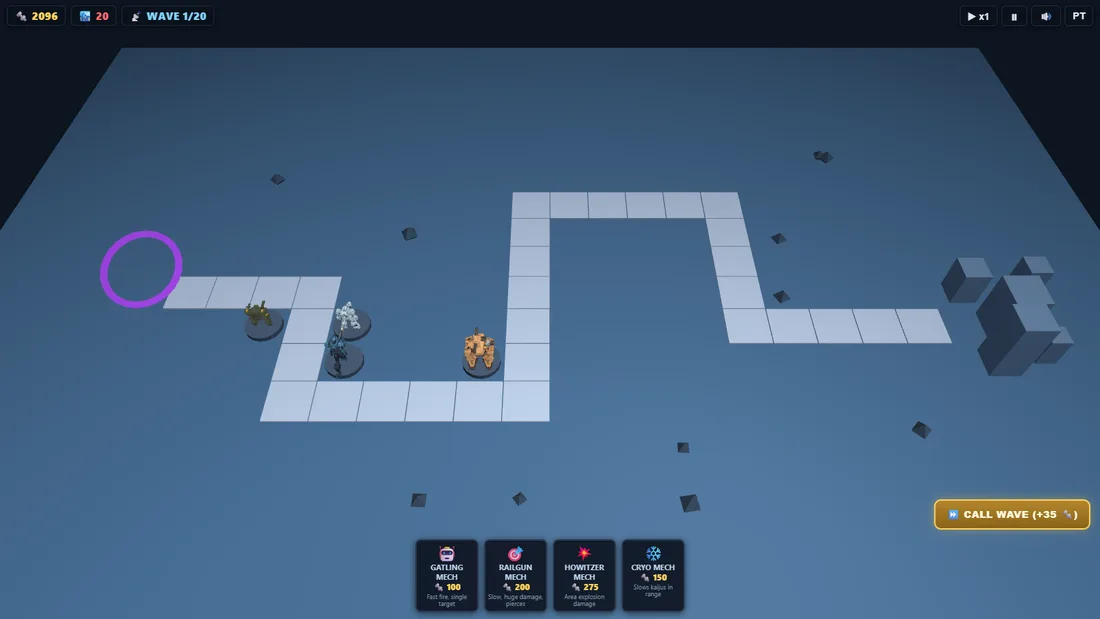
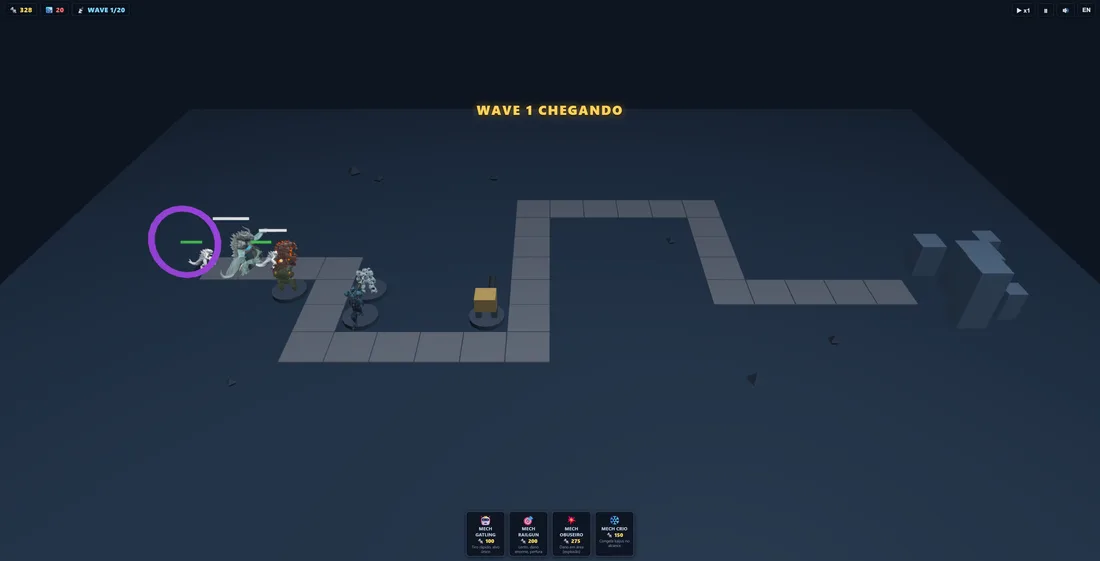
This game came together as a long conversation with Claude Code, in numbered rounds, each ending with a test in the browser through Playwright and a new list of complaints from me. I gave feedback like "there is no scenery", "the kaijus slide without animation", "the roar is too loud", and the next round fixed it. It was before the studio had a cast of specialist agents, so research was part of the same conversation.
One round was pure homework. I asked for an analysis as a game designer of the tower defenses that top the store, and the screenshots of Kingdom Rush, Bloons TD 6, Rush Royale, Grow Castle, Empire Warriors and Defense Zone 3 became lessons: a near top-down camera for readability, bright saturated colors, floating numbers and juice, and the rule that on a phone the whole game must work with one hand. In portrait the map rotates 90 degrees so the build bar lands under your thumb.
Another round was reading negative reviews from the public Steam API for several tower defense games and turning each complaint into a feature: a difficulty selector, a preview of the next wave, per-tower targeting priority, kill counters and a two-click sell.
The AI toolbox
- Meshy made the kaijus and the mech towers. Each model goes through generate, remesh, rig and walk animation, because raw models arrive far too heavy for a browser.
- Replicate painted the menu art, tileable ground textures for each biome and the day and night skies.
- Suno, through SunoBoard, composed three tracks for menu, battle and boss, with a crossfade when a boss arrives.
- ElevenLabs made roars, deaths, railgun and explosion sounds and the ambience loops for day, night and rain.
- Playwright was the tester: desktop, phone, and a bot that plays the campaign without cheating.
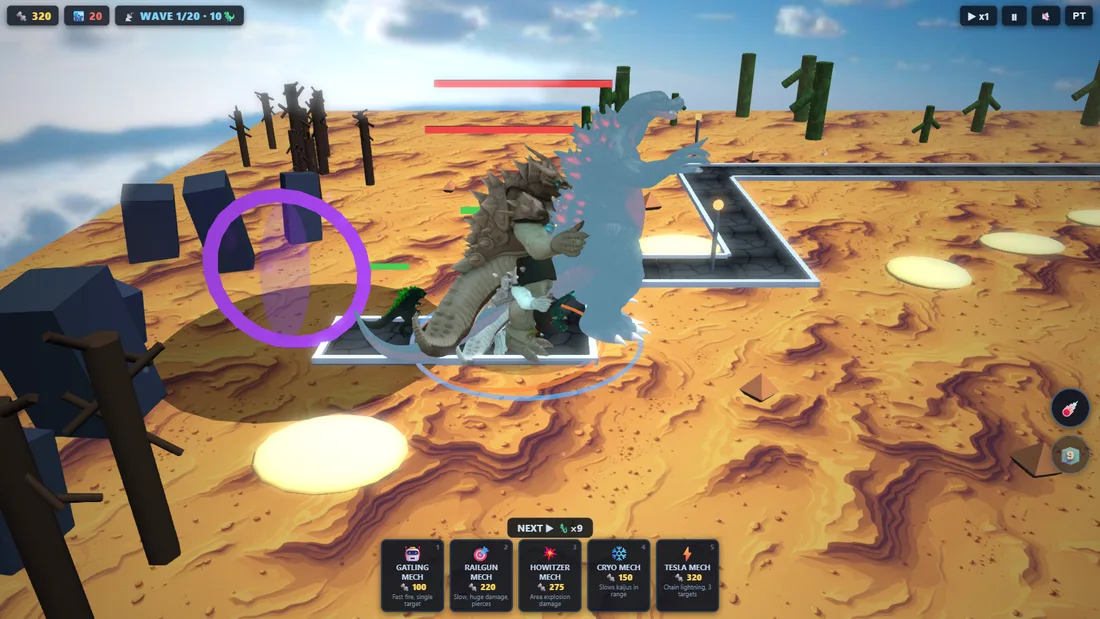
The game grew in directions I did not plan: four randomized biomes, a day and night cycle, rain, snow and ash, four bosses with their own abilities, an infinite mode, and a daily challenge where everyone gets the same route and the same waves. A Wordle-style share text came with it.
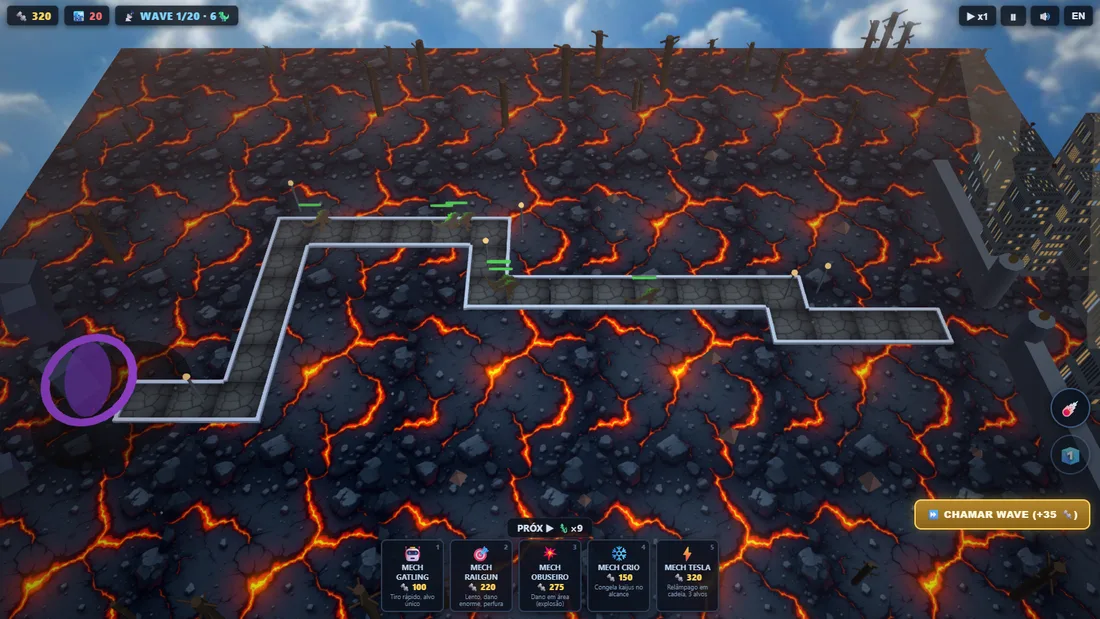
It was the lab that opened the road to the next 3D game. If you want to see how a monster the size of a building feels coming down a road, it is free to play in the browser.
Game developed by Kelvin Biffi: kelvinbiffi.com
Soundtrack made with Suno through SunoBoard.
Sound effects made with ElevenLabs.