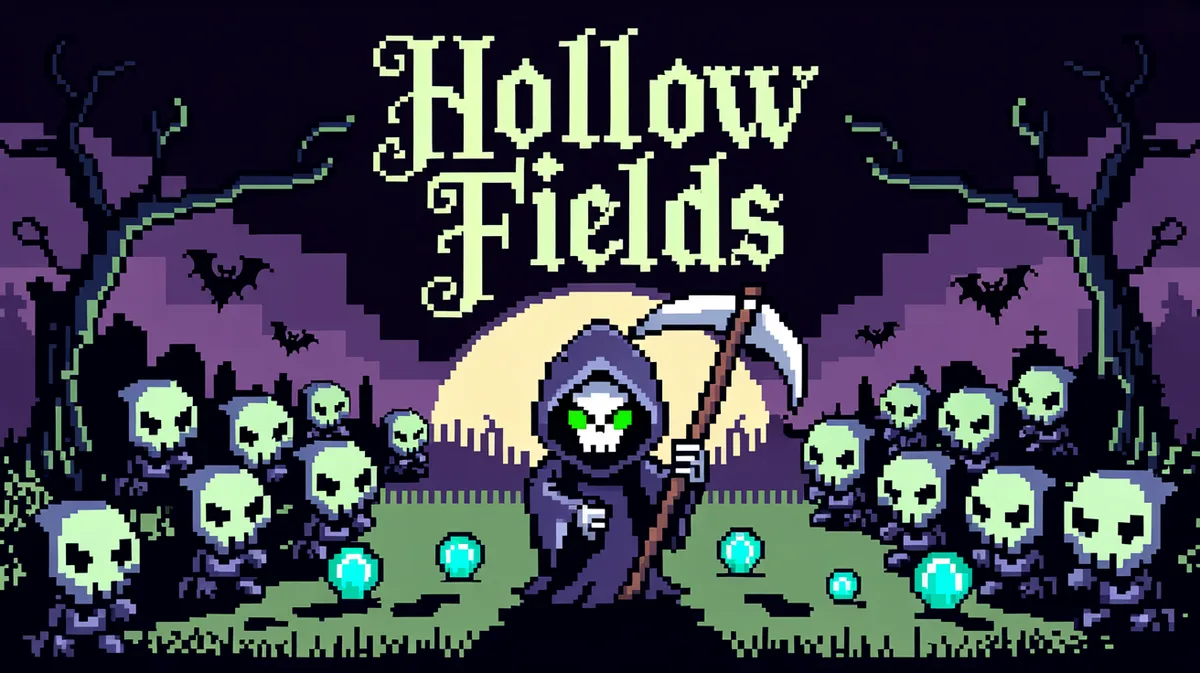
Hollow Fields is the game that started the studio, and it is older than anything I now call a pipeline. There was no game-pm, no board, no formal QA report. There was me, Claude Code in a terminal, and a stubborn idea: a survivors-like that respects your time. This is how it was really made, including what I did not use.
Homework before the first line of code
The fantasy came first: you are the last Reaper, you harvest the souls of the horde, and those souls buy upgrades in the middle of the run. But before building much more, I asked Claude to read what players say about the genre's leaders (Vampire Survivors, Brotato, Halls of Torment, Death Must Die) and write it down in a plan.
The pattern was clear. Players love unlocks that never stop, characters that change how you play, and builds that break the game in a fun way. They hate progression that dries up, runs that feel identical, and games that cannot suspend a run. That plan became the backlog: eight continuous unlocks, three playable characters with their own weapons, eighteen achievements with no RNG grind, endless mode, a suspend-run option, and a Bard in the Sanctuary who comments on your last death.
Who made what
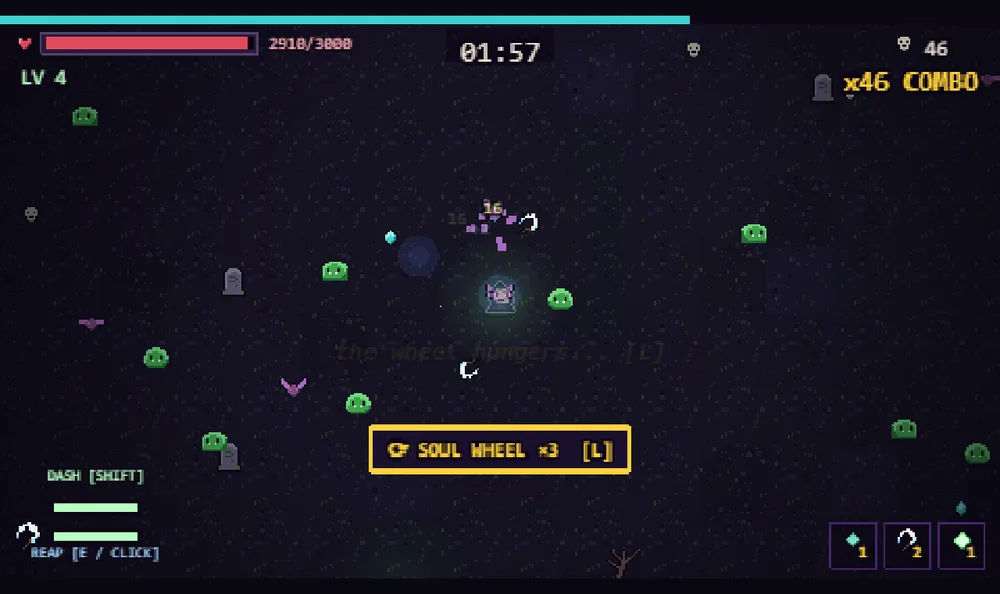
Claude Code wrote the game with me, conversation by conversation. The characters and enemies are pixel art typed directly into code as pixel maps, and the textures are generated when the game starts, so there are no sprite files at all. I did not use an image model for them.
Image generation came later and only for illustrated screens: the death and victory art through Replicate with a Flux model, and the store capsule with Ideogram. The music is seven Suno tracks generated through the SunoBoard MCP, switched per scenario. ElevenLabs made the sound effects, four demonic boss voices and the narrated intro. For QA, Claude drove the game through the Playwright MCP, read the Phaser state, clicked real buttons and took screenshots.
The feedback that flipped the wheel
My favorite mechanic was a slot machine. Leveling up did not interrupt the game: it banked a spin, and you pulled the lever when you wanted. The wheel picked your upgrade at random, and you could spend a premium soul to stop it and choose.
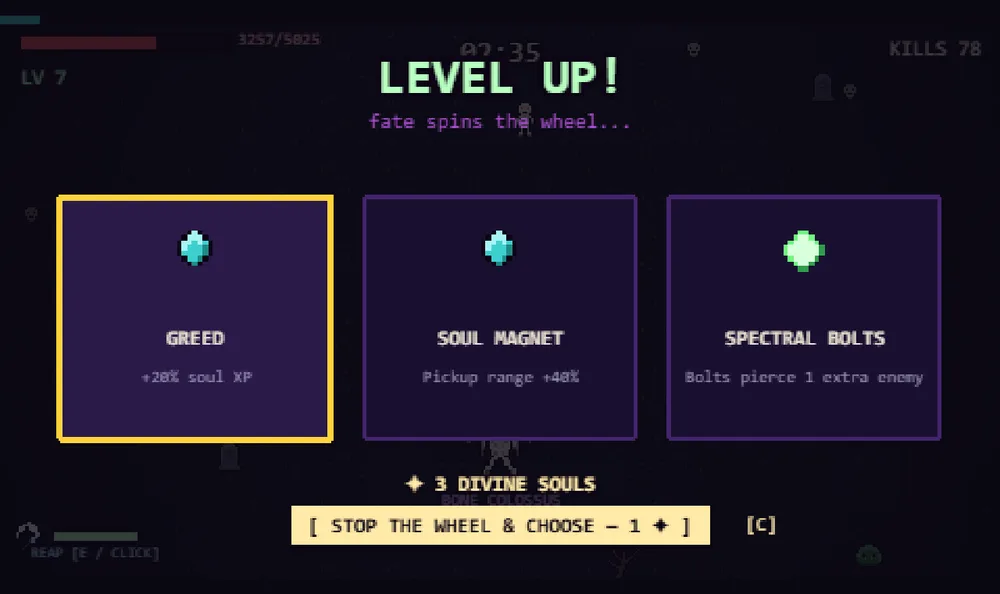
A player who tested it sent three notes: having to click on level-up is annoying, a random skill instead of choosing is not fun, and it took a while to understand what the premium soul did. So I inverted the model. Now you choose one of three cards by default, and the wheel became an optional gamble called Tempt Fate that pays a bonus if you take the risk. Souls now pay for rerolling and banishing cards, and level-ups open on their own unless you turn that off.
Hollow Fields is free to play in the browser, and the ranking API I built for it later grew into the one that serves other K3 games. It is also where the house rule was born: gameplay first, real QA, and listen to the player.
Game developed by Kelvin Biffi: kelvinbiffi.com
Soundtrack made with Suno through SunoBoard.
Sound effects made with ElevenLabs.