Every nonogram hides a picture. Stitch Logic asks a small question: what if the end of the puzzle was its best part? When you finish the grid, the picture does not just appear. It stitches itself in real cross-stitch, needle going over the linen, one stitch at a time. This is the story of how a one-person studio and a team of AI agents built that moment.
A grandmother with a sewing box
The game came out of a trend search: the nonogram genre is big and lasting, and the apps on top had loud problems. Their reviews became design pillars: ads that do not interrupt, cells you can actually hit with a finger, no lives that punish a wrong tap, cloud save, and a hint that teaches instead of just handing out the answer.
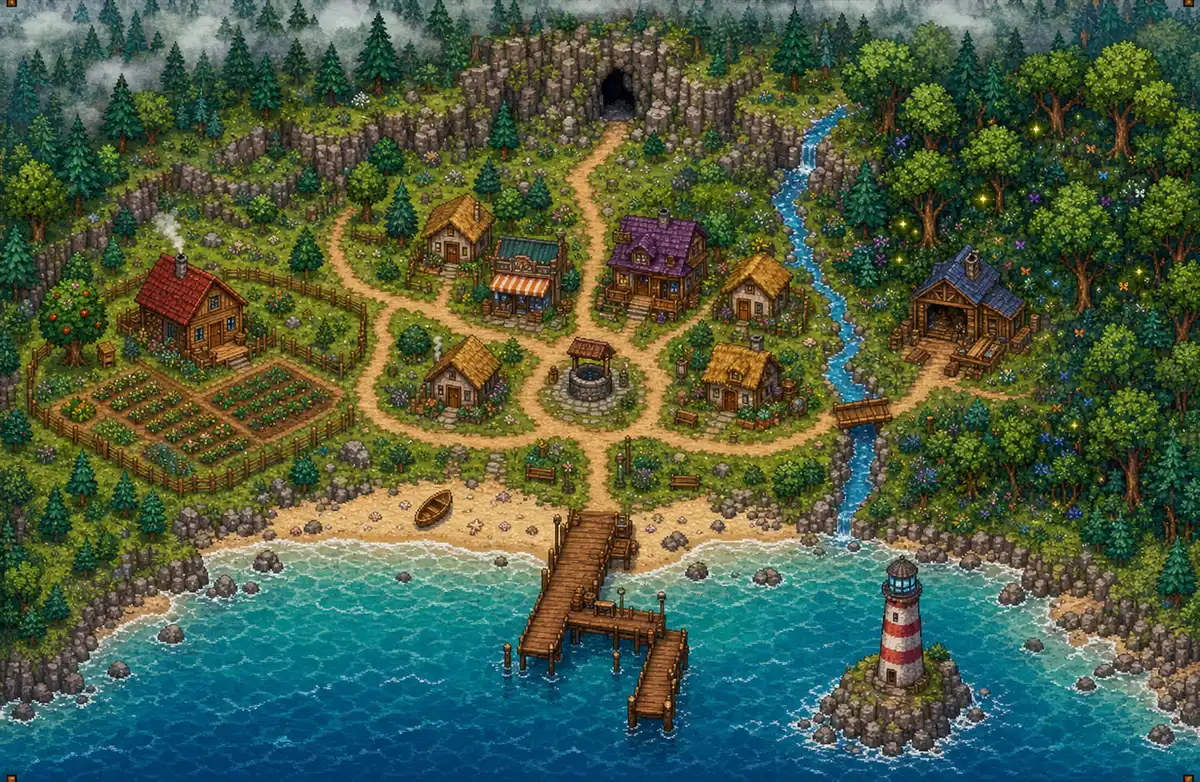
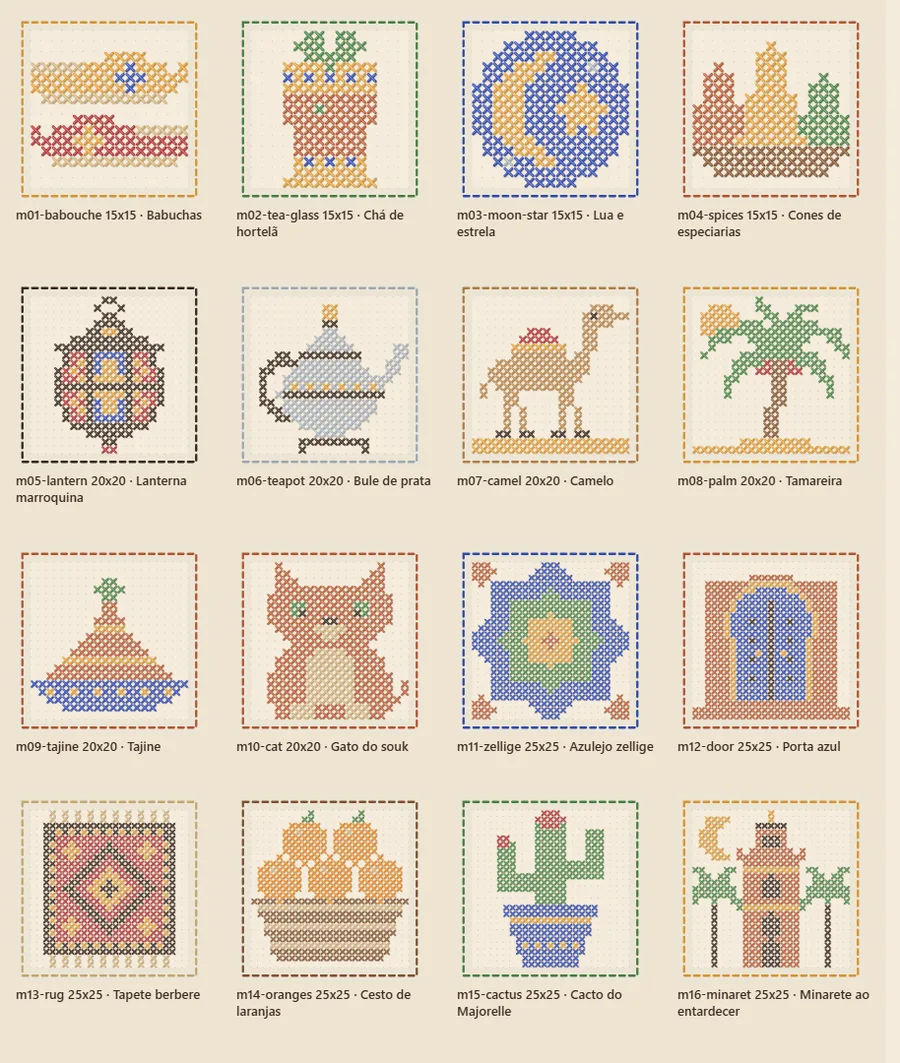
For the fiction, I wanted something warm. Grandma Ada sold her house to travel the world and mails sewing patterns written in her secret code: the numbers on the edges of the grid. Decode them and you stitch a patch. Each trip (her garden, Lisbon, Kyoto, Lantern Island, Marrakech) becomes a quilt. Pip, a hedgehog who is also her pincushion, points to the next deduction and explains the technique. There are 80 hand-designed patterns across five trips.
The agent team at work
The heart of it is not art, it is a solver. game-dev built a line solver, a validator that rejects any pattern without a unique solution and a difficulty grade, all on top of the platform of the first game. Then each pattern was drawn by script, checked, and redrawn by hand when it failed. Some passed in two rounds, others, like the swallow of Lisbon, needed ten.
game-artist made Pip in two steps: a base generated with Retro Diffusion (rd-plus), then PixelLab to turn it into a character with idle, hint, cheer and sleep animations. game-audio composed a 96 bpm track that is warm but, on purpose, not sleepy, and recorded the needle and thread sounds with ElevenLabs. In a later update, seven new sounds started as ffmpeg synthesis and were replaced by generated ones.

game-ux played as a new player and gave the first build 7.0. The honest findings: the "stitched" mark looked almost identical to the "not here" X, the Pip hint kept saying "border" for everything, and the instruction to drag disappeared after 2.6 seconds. The hint was rewritten to name the row and the technique. Then game-qa ran an independent pass with Playwright and real touch events, failed the build with five major bugs, and made me happy that I had asked for it.
The AI tools
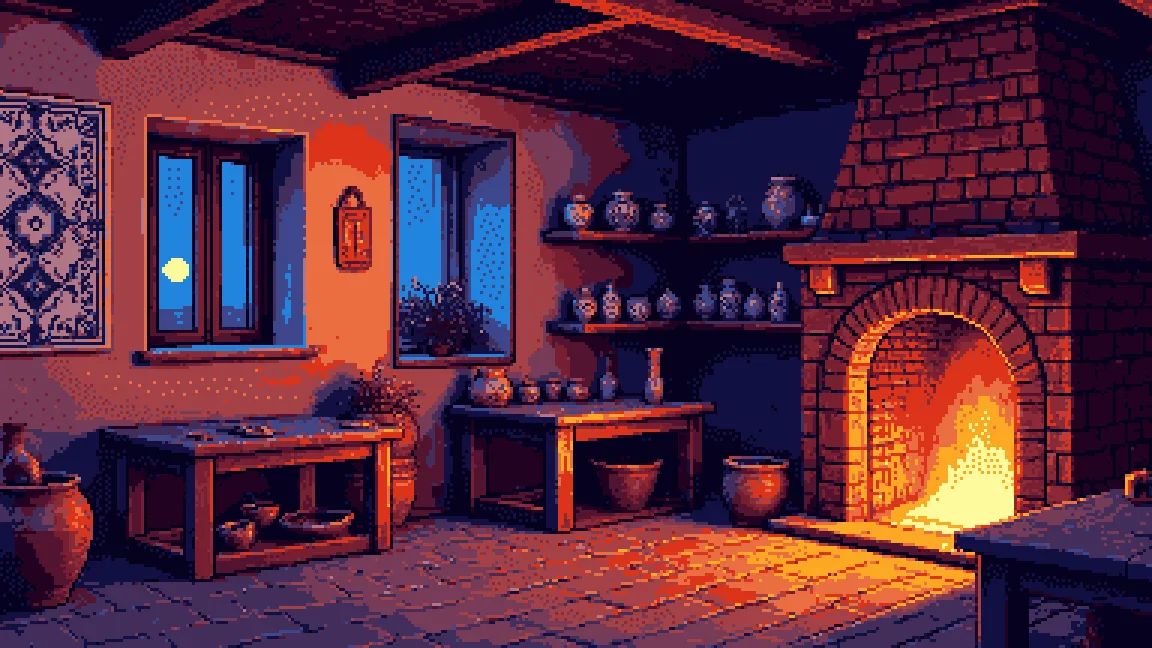
Claude Code runs the whole thing: code, scripts, validators, the board. Replicate hosts Retro Diffusion for the room, the postcards, the spool and the icon, with one limit I only learned by hitting it: rd-plus tops out at 384 px, so the icon and the hoop were generated at 256 and enlarged, which makes their pixels slightly bigger than the rest. Suno through SunoBoard made the soundtrack, ElevenLabs the sounds.
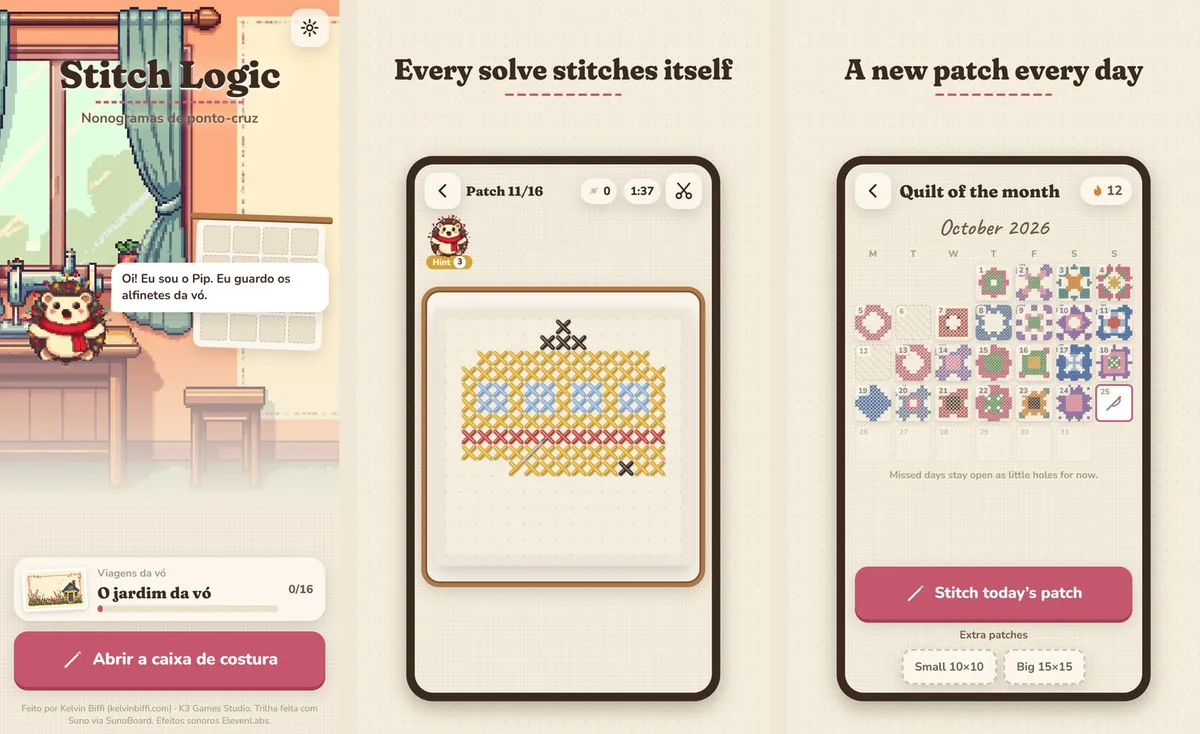
If you stitch one patch a day, the quilt of the month fills up. If you skip a day, it waits for you with a little hole.
Game developed by Kelvin Biffi: kelvinbiffi.com
Soundtrack made with Suno through SunoBoard.
Sound effects made with ElevenLabs.