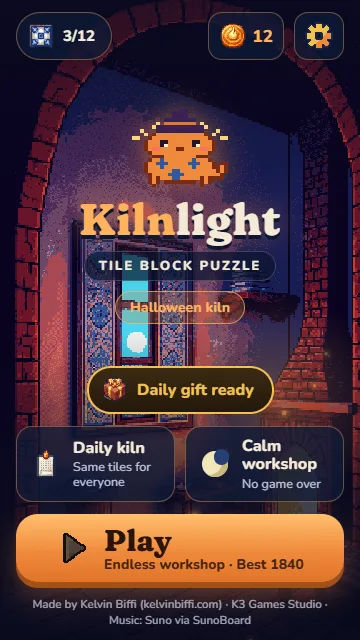
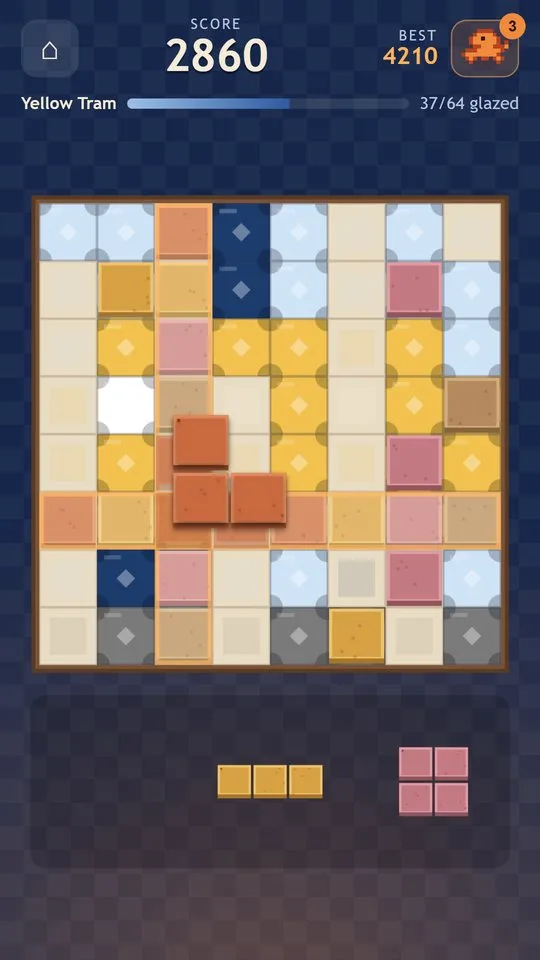
Block puzzles are a genre everyone already knows how to play, and that is both the good news and the problem. In the usual version a line disappears and that is it. Kilnlight began with a question: what if clearing a line left something beautiful behind? The answer came from Portuguese tiles, painted and fired in a kiln: every burned line glazes the tile that was behind it, and slowly a whole mural appears.
A wall, a kiln and a salamander
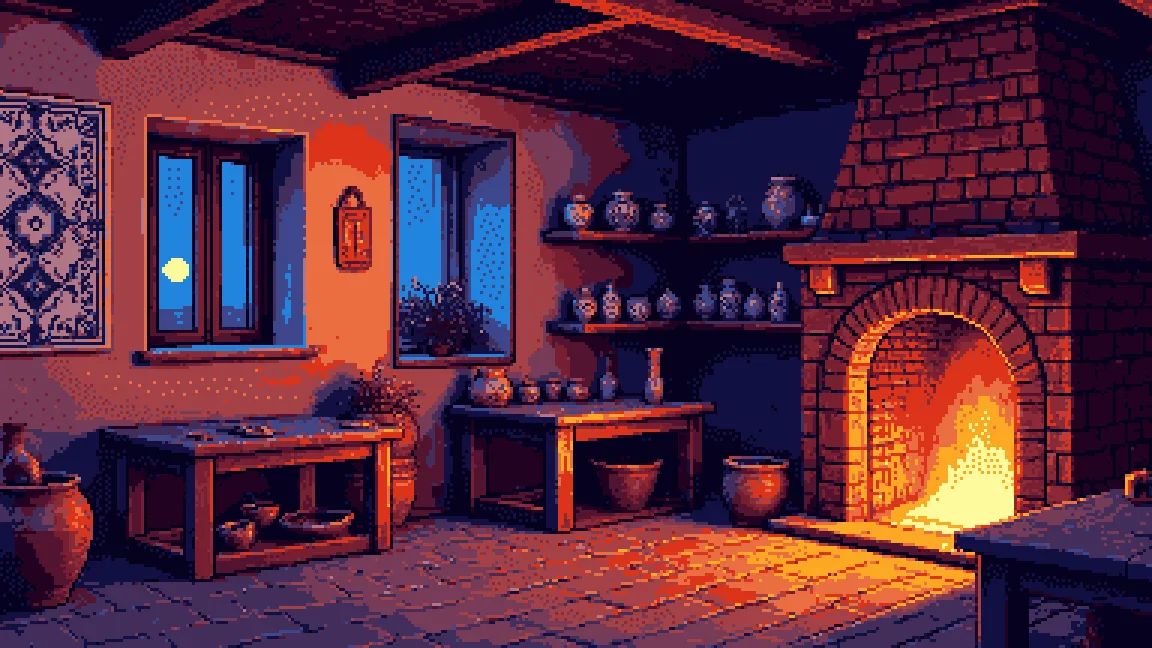
The market research showed a crowded field of block puzzles with gardens, wood and jewels, plus a common complaint from players: pieces that felt stolen, hands you could not place. So the studio chose a different look (cobalt blue, kiln orange, a workshop at night) and made fair piece dealing a public rule. The first three hands always fit, every hand has at least one placeable piece, and you never get three equal pieces. The twist is the mural: fill 64 cells and the panel goes to your collection while a new one starts.
Brasa, the salamander who lives in the kiln, is the mascot. She helps when the wall is full: rotate, swap pieces, undo, hammer, bomb and a breath of fire, each costing one ember. Embers come free every day, and there are none in the daily kiln, which is the same for everyone.
The agent team at work
The first slice was drawn in code on purpose. game-dev painted the raw tiles, the glaze motif, the plaster and the first murals straight onto the canvas, with synthesized sounds, so the loop could be played before any generated art existed. game-ux scored that slice 7.6 and the useful notes were small and concrete: the "bone" colored clay disappeared against the plaster in the Halloween event, so it became a teal one, and numbers floating over a move that burned nothing just added noise.
game-balance wrote the dealer rules and a simulator. When a later UX diagnosis showed that about one game in four ended in 15 moves or fewer, the dealer was rewritten with a gentle start and a mercy bias toward pieces that close lines. In 600 simulated games that share fell from 26% to 12%, and the median game got longer. The simulator also tuned the economy of embers.
game-qa took a lesson from Stitch Logic. Before anything else it ran the build with modern browser features removed, to make sure old Android WebViews would not show a blank screen. On the emulator it then found a bug no web test could: the shop took seconds to open and opened empty when billing did not answer. The fix was a "looking up prices" state, a timeout and a script that taps every button with real touch and checks size and response.
The AI tools
Claude Code drove everything. For art, Retro Diffusion on Replicate (rd-plus) made the night workshop scenes for portrait and landscape and a set of icons. It also made a salamander I did not use: it looked too much like someone else's mascot, so Brasa was redrawn by hand, pixel by pixel, in code. The soundtrack was made with Suno through SunoBoard. The ceramic clacks, the kiln breath and the chime that rises with each combo are synthesized in the game itself.
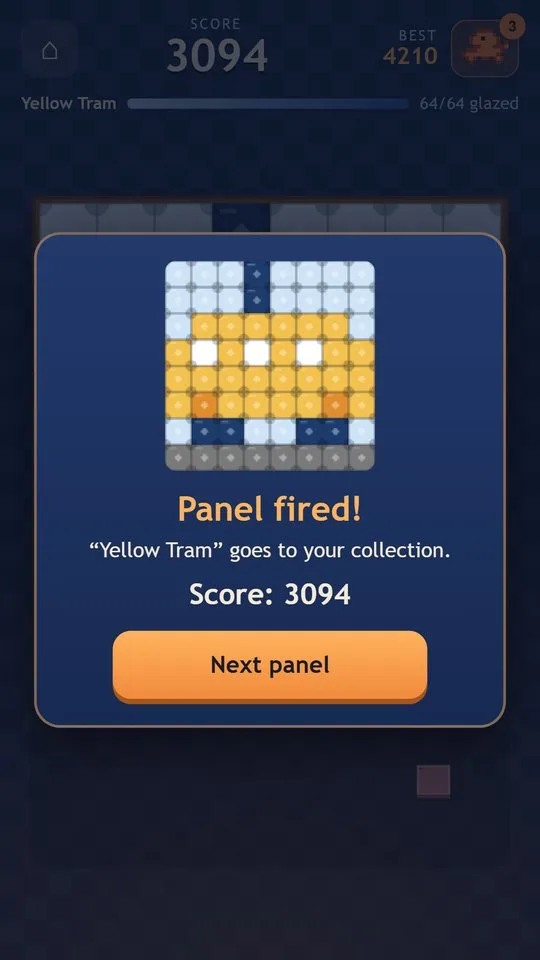
There are twelve murals to collect so far, from a fishing boat to a lucky rooster, and the daily kiln is the same wall for everyone.
Game developed by Kelvin Biffi: kelvinbiffi.com
Soundtrack made with Suno through SunoBoard.