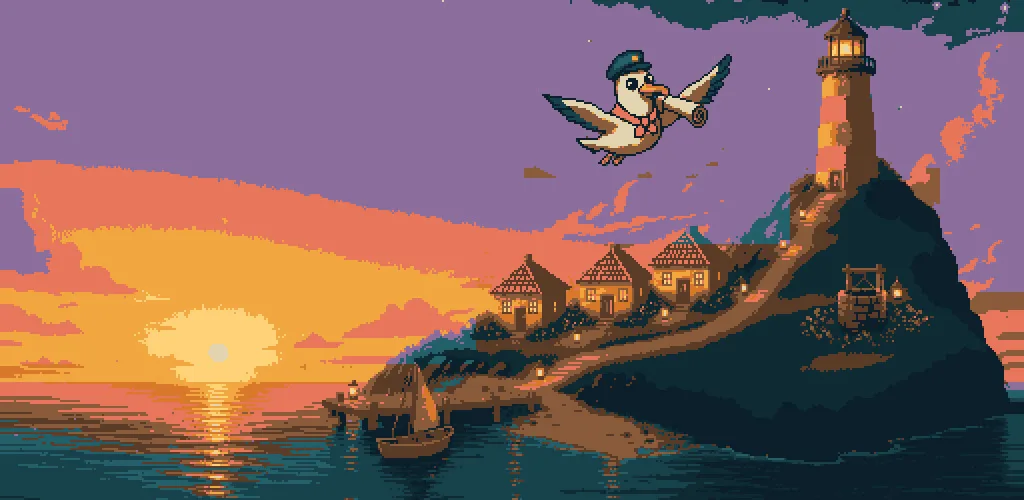
Lantern Logic started with a simple question: what if a daily logic puzzle felt like a calm ritual instead of a queue of levels? Three puzzles a day, the same for everyone, and every one you solve lights a lantern on a pixel art island. I direct, a team of AI agents does the rest, and this is how that actually went, including the parts that went badly.
Where the idea came from
The concept was mine, and the market research confirmed the gap. Daily logic puzzles had already gone viral, but the competitors were minimalist and purely utilitarian: a grid, a timer, nothing to come back for. The GDD turned that into five pillars: a world that grows with each puzzle, a weekly curve (easy Monday, hard Sunday with a 10x10 master puzzle), endless practice, async duels by link, and a finish level far above the category.
The fiction came next. You are the new keeper of an island whose lanterns went out. A gull named Tide (Maré in Portuguese) brings three pages of the old keeper's notebook every morning. The three puzzles are Beacons, Trail and Shells, each with a unique solution you reach by logic alone. I also used gdd-forge to theme the other islands of the archipelago.
The agent team at work
game-pm kept the board and the quality gates: average UX score of 8 or more, no dimension under 6, identity at 8 or more. game-writer gave Tide her voice: passive-aggressive and cute, and the blame always falls on the wind, the island or herself, never on you. It also caught a naming clash: I had a puzzle called Tide and a gull called Tide, so the puzzle became Shells.
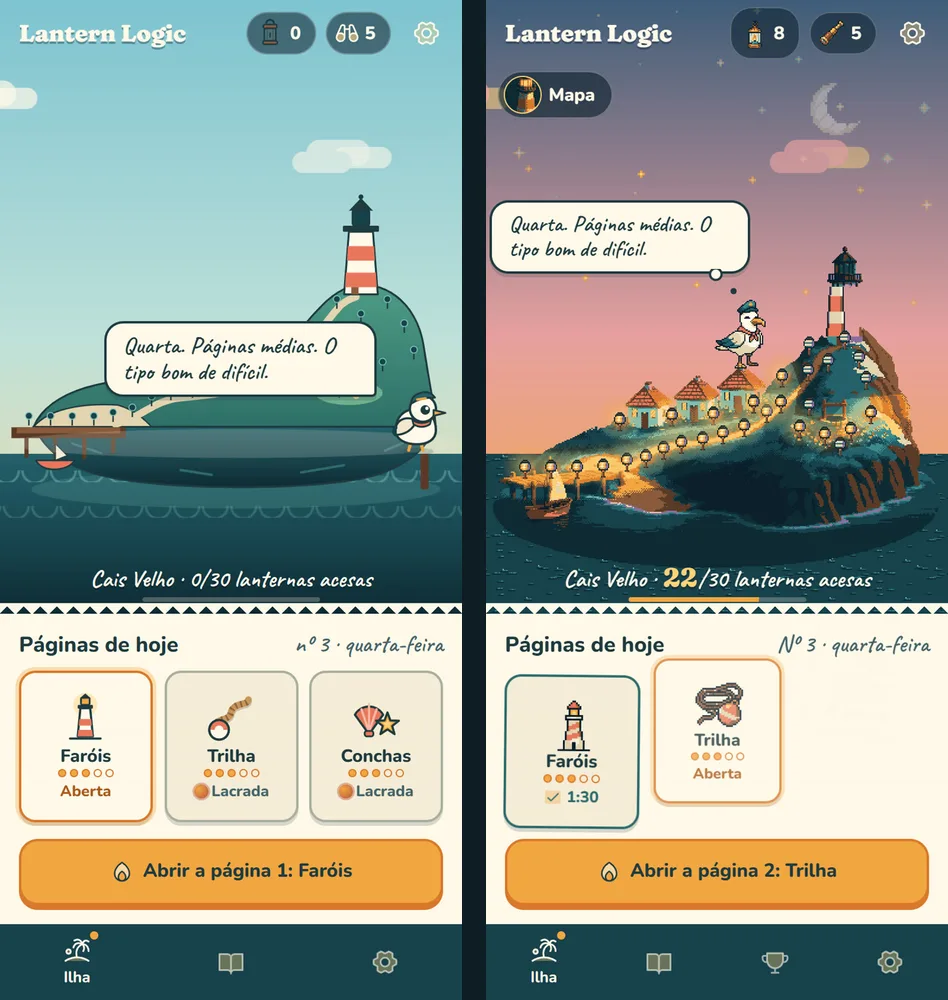
The first build was functional and ugly. game-ux played it as a brand new player and gave it 5.7 out of 10: the home was two white cards on cream, the lantern reward was almost invisible and the gull's speech bubble sat on top of the houses. The redesign brief went to game-artist, game-vfx (a feedback map where every action gets a visual answer), game-audio and game-dev. The next UX round gave 7.9, the one after gave 8.3 and passed the gate. game-balance ran headless simulations of the weekly curve and the leagues before any human saw them.
game-qa failed the first full pass with seven major bugs. It played with the Playwright MCP, with real touch events and a few pixels of jitter between touch down and up, and that was the test that mattered: a finger that trembles near the edge of a cell turned into a drag. The cell clock also kept running behind the pause menu.
The AI tools
Everything is orchestrated from Claude Code. For the art, I planned Retro Diffusion on Replicate, but it failed on every attempt during the art session, so game-artist changed the pipeline: gpt-image-2 for the composition of the island blueprints and the world map, PixelLab to pixelize and to build the gull with her animations, and a script that forces every image into a 16 color palette. The music comes from Suno through SunoBoard, the tactile sounds (wooden peg, chalk on the path, a glass tink when a lantern lights) from ElevenLabs.
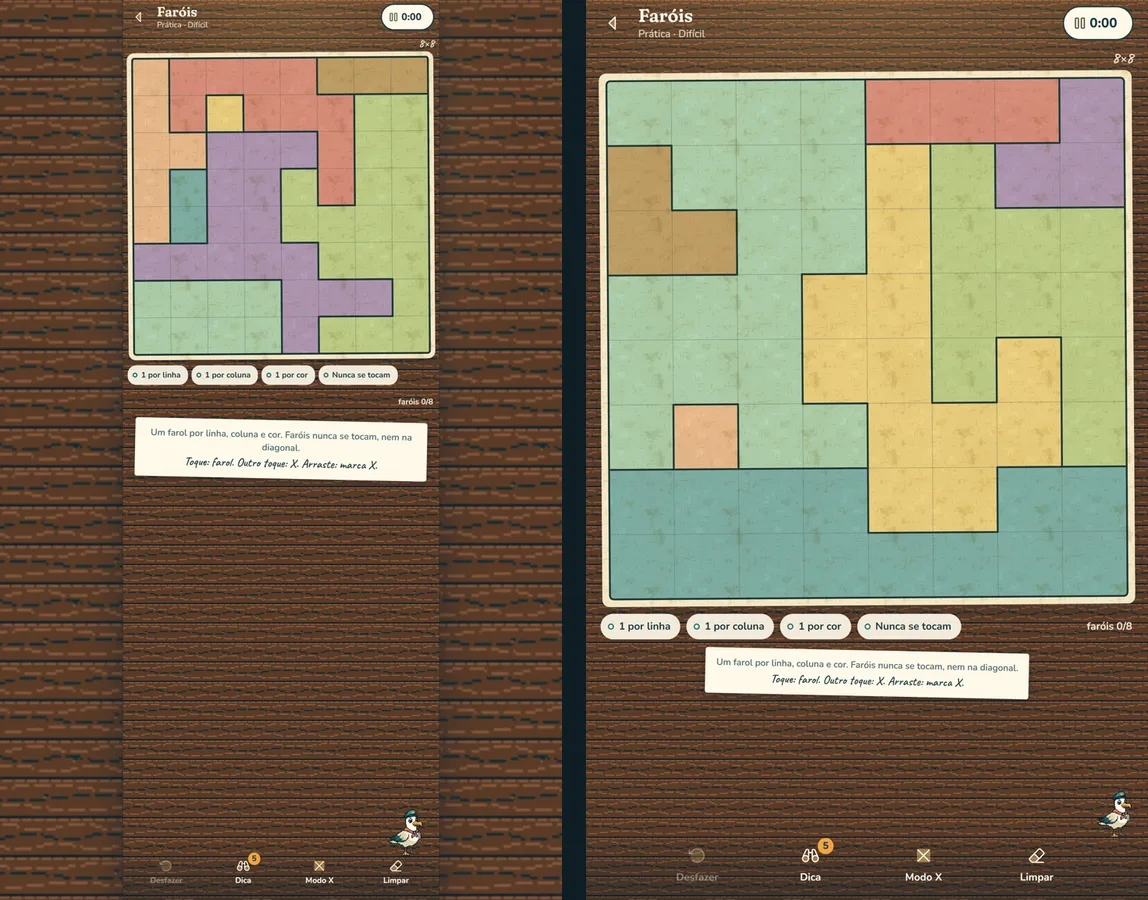
The best feedback came from a family playtest. On a large tablet the board was a small island in the middle of a wooden sea, the hint only outlined cells without explaining anything, and the music made someone sleepy. All three became changes: the board grew to fill the screen, the hint now makes the move and explains why, and there is a livelier track you can pick in Settings.
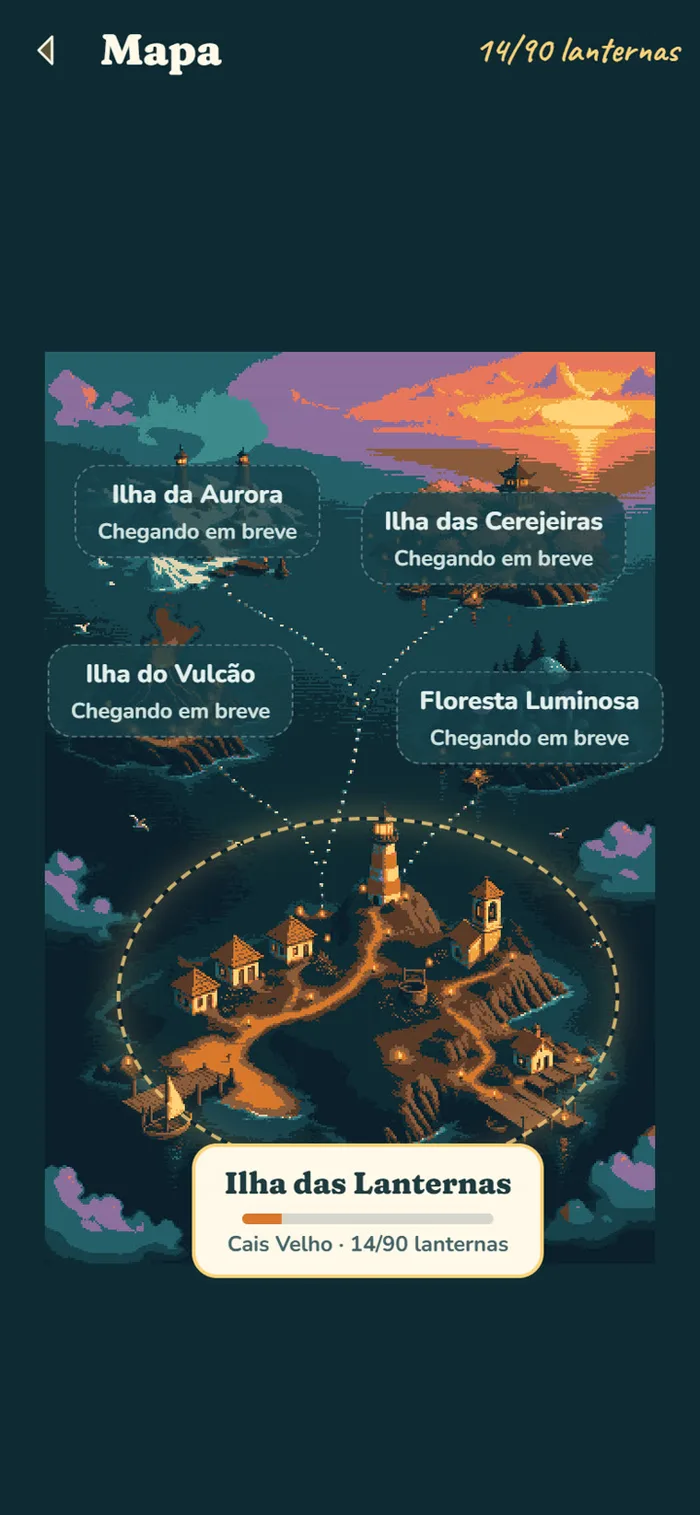
Lantern Logic is the studio's reference platform now: the next games reuse its ritual, its league and its way of working. The island still has four dark neighbors in the fog.
Game developed by Kelvin Biffi: kelvinbiffi.com
Soundtrack made with Suno through SunoBoard.
Sound effects made with ElevenLabs.